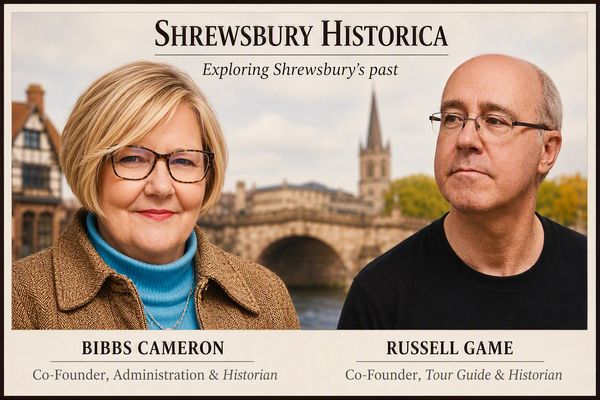
Shrewsbury Historica

Welcome visitors

Welcome visitors

Welcome visitors

Welcome visitors

Welcome visitors

Welcome visitors

About Shrewsbury Historica

A vibrant collage of medieval art, stained glass, and symbolic imagery against a blue background.

Our Story

At the Shrewsbury Historical Society, we are passionate about providing high-quality education to all individuals. Our story began with a desire to make local history accessible to everyone. We believe that our talks are a powerful tool that can inform and enlighten others about our history. We have just completed our five-year-long series on Shrewsbury’s history, covering a timeline from prehistory to the present day. 2026 we will revisit Shrewsbury's History with a more detailed 7 year series.

Snow-covered Tudor-style houses behind bare trees in winter.

Our Mission

Our mission at the Shrewsbury Historical Society is to empower individuals with the knowledge to know their town. We strive to create a supportive learning community that fosters growth, creativity, and innovation. At Shrewsbury Historica, we are committed to helping our followers achieve a deep understanding of their surroundings. 


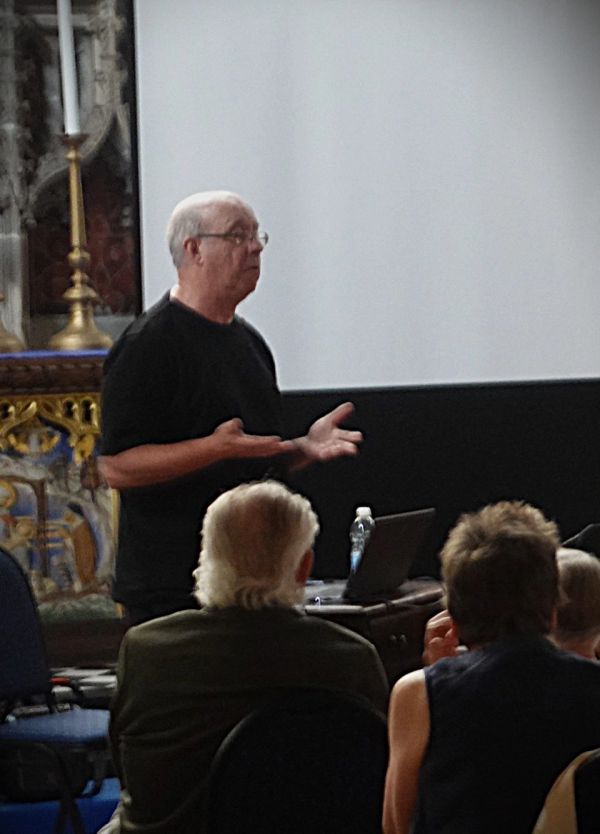
We believe that learning should be engaging, interactive, and fun. That's why we have developed a unique approach to presentations that combine traditional teaching methods with Russell’s cutting-edge technology. Our presentations are designed to be mobile, allowing us to come to you, and can also be bespoke so that any topic you wish to learn about can be customized.

A Tour of Shrewsbury Inns within the Loop. Russell Game Tour

Tickets Available

July 14.


Tour 1

These are the Inns toured


Bull (Butcher Row), House of the Rising Sun (Butcher Row), Loggerheads (Church Street), Cromwell's (Dogpole), Nag's Head (Wyle Cop), Henry Tudor House (Wyle Cop), Lion Hotel (Wyle Cop), Wheatsheaf/Old Post Office (Milk Street), Golden Cross (Princess Street), Old Plough (Square), Cross Keys (High Street), Three Fishes (Fish Street)


Sold out


May 19.


Tour 1


Bull (Butcher Row), House of the Rising Sun (Butcher Row), Loggerheads (Church Street), Cromwell's (Dogpole), Nag's Head (Wyle Cop), Henry Tudor House (Wyle Cop), Lion Hotel (Wyle Cop), Wheatsheaf/Old Post Office (Milk Street), Golden Cross (Princess Street), Old Plough (Square), Cross Keys (High Street), Three Fishes (Fish Street)


Tickets in the collection

Ticket Available

June 16 


Tour 2

These are the Inns covered in Tour 2


Yorkshire House (St Mary's Place), St Nicholas' Bar (Castle Street), Castle Vaults/Bull at the Gate (Castle Gates), Alb/Salopian (Smithfield Road), Shrewsbury Hotel (Smithfield Road), King's Head et al (Mardol), Hole in the Wall (Shoplatch), Coach & Horses/Admiral Benbow (Swan Hill,

Tickets Available

August 12


 Tour 2  


Yorkshire House (St Mary's Place), St Nicholas' Bar (Castle Street), Castle Vaults/Bull at the Gate (Castle Gates), Alb/Salopian (Smithfield Road), Shrewsbury Hotel (Smithfield Road), King's Head et al (Mardol), Hole in the Wall (Shoplatch), Coach & Horses/Admiral Benbow (Swan Hill)

Tickets
Four people dressed in historical costumes stand in front of a red brick castle on a sunny day.
Historic Tudor-style buildings with a tall Gothic church tower under a clear blue sky.
Intricate stone carving of an angel playing a harp with detailed wings.
Two people smiling indoors, one in a red headpiece and black outfit.
Intricately carved wooden ceiling in a historic stone cathedral.
Interior of a church with stained glass windows and wooden chairs.
Two men in medieval costumes playing traditional string instruments.
Stained glass panel depicting a religious scene with Mary, baby Jesus, and a saint.
Stained glass window depicting the crucifixion of Jesus Christ with vibrant colors.

The Making of Shrewsbury. 1. A Town Forged in Time“

1. “Shrewsbury: A Town Forged in Time“

1. “Shrewsbury: A Town Forged in Time“

1. “Shrewsbury: A Town Forged in Time“

FAQs

What is new in the forthcoming programme?

The programme will still be presented by Russell and will comprise several episodes lasting for five months (August-December) but the overall programme will last longer (seven years, not five) and thus permit an investigation into more topics. Greater use of video and computer technology will a

FAQs

What is new in the forthcoming programme?

The programme will still be presented by Russell and will comprise several episodes lasting for five months (August-December) but the overall programme will last longer (seven years, not five) and thus permit an investigation into more topics. Greater use of video and computer technology will also become apparent as the programme develops. There will also be greater integration of Shrewsbury within the context of national history and, where relevant, reference to other parts of Shropshire.

Do I need to book a whole series?

We cannot guaranteent tickets will be available


Why does this programme last for seven years, not five?

Since starting the first five-year programme, Russell has undertaken considerable research into the history of Shrewsbury, which has led to new insights and further nuances. These have been taken into account in the new programme and, whilst they could have been condensed into five years, Russell felt that this would exclude too much in the way of explanation or detail. Therefore, a seven-year programme has been developed.

Is there greater mention of places outside Shrewsbury?

There was an original concept of making this programme a history of Shropshire, but this would have made it far too unwieldy – after all, places like Oswestry and Ludlow deserve a history series all to themselves. Our programme does focus on Shrewsbury, but the new programme makes greater reference to other places in Shropshire than was the case in the first programme.

Will the fifth episode in a series still be about miscellaneous subjects?

No. Russell was never really happy with the fifth episode in any of the previous series, so the new programme incorporates all topics as part of the main narrative.


Will notes still be provided?

A shortened transcript of the presentations will be provided so that nobody has to take notes during the presentations. These will be handed out as usual either during the interval or at the end of the presentation. However, there will be no additional information with the notes, only a shortened transcript of the presentation. Any information that was in the notes for the first programme has now been incorporated into the main narrative.


1. “Shrewsbury: A Town Forged in Time“

1. “Shrewsbury: A Town Forged in Time“

1. “Shrewsbury: A Town Forged in Time“

FAQs


Will notes still be provided?

A shortened transcript of the presentations will be provided so that nobody has to take notes during the presentations. These will be handed out as usual either during the interval or at the end of the presentation. However, there will be no additional information with the notes, only a shortened transcrip

FAQs


Will notes still be provided?

A shortened transcript of the presentations will be provided so that nobody has to take notes during the presentations. These will be handed out as usual either during the interval or at the end of the presentation. However, there will be no additional information with the notes, only a shortened transcript of the presentation. Any information that was in the notes for the first programme has now been incorporated into the main narrative.


Will the presentations still take place in the meeting room?

Yes. We can cater for a maximum of 30 people in the meeting room, which is usually enough for the number of people who attend each episode. It is also simpler to set up the technology in the meeting room than to have the exhibiting artist in the Great Hall move their exhibits and then for us to set up a screen display. Unfortunately, the meeting room is not accessible to some people because it is within a historic building. If this is an issue for anyone who would like to attend, then please get in touch with us.

Will the presentations be made available online?

Regrettably, this is not possible because of copyright issues


How do we get tickets?

You can get tickets for each presentation on Eventbrite or by clicking on the link within the websites for Shrewsbury Civic Society or Shrewsbury Historica. It may also be the case that tickets are available on the door on the day of the presentation, but this cannot be guaranteed and those with valid tickets bought online will take precedence.

.

Does Shrewsbury Civic Society have other presentations?

Yes, we offer several presentations and tours throughout the year. To learn about them, go to the websites for Shrewsbury Civic Society or Shrewsbury Historica

1. “Shrewsbury: A Town Forged in Time“

1. “Shrewsbury: A Town Forged in Time“

. EPISODE ONE – FROM THE IRON AGE TO THE END OF THE ROMANS

FAQs


Will notes still be provided?

A shortened transcript of the presentations will be provided so that nobody has to take notes during the presentations. These will be handed out as usual either during the interval or at the end of the presentation. However, there will be no additional information with the notes, only a shortened transcrip

FAQs


Will notes still be provided?

A shortened transcript of the presentations will be provided so that nobody has to take notes during the presentations. These will be handed out as usual either during the interval or at the end of the presentation. However, there will be no additional information with the notes, only a shortened transcript of the presentation. Any information that was in the notes for the first programme has now been incorporated into the main narrative.


Will the presentations still take place in the meeting room?

Yes. We can cater for a maximum of 30 people in the meeting room, which is usually enough for the number of people who attend each episode. It is also simpler to set up the technology in the meeting room than to have the exhibiting artist in the Great Hall move their exhibits and then for us to set up a screen display. Unfortunately, the meeting room is not accessible to some people because it is within a historic building. If this is an issue for anyone who would like to attend, then please get in touch with us.

Will the presentations be made available online?

Regrettably, this is not possible because of copyright issues


How do we get tickets?

You can get tickets for each presentation on Eventbrite or by clicking on the link within the websites for Shrewsbury Civic Society or Shrewsbury Historica. It may also be the case that tickets are available on the door on the day of the presentation, but this cannot be guaranteed and those with valid tickets bought online will take precedence.

.

Does Shrewsbury Civic Society have other presentations?

Yes, we offer several presentations and tours throughout the year. To learn about them, go to the websites for Shrewsbury Civic Society or Shrewsbury Historica

. EPISODE ONE – FROM THE IRON AGE TO THE END OF THE ROMANS

. EPISODE ONE – FROM THE IRON AGE TO THE END OF THE ROMANS

. EPISODE ONE – FROM THE IRON AGE TO THE END OF THE ROMANS

All images generated by AI

Part One - Prehistoric Times

· Iron Age hillforts in Shropshire and around Shrewsbury - Old Oswestry, the Wrekin, Caer Caradoc, Clunton, Caer Din Ring, the Berth, Baschurch, Nesscliffe, Llanymynech

· The river loop (later Shrewsbury) in the Iron Age

· Settlement and movement within the loop

· The fords into the loop

·

All images generated by AI

Part One - Prehistoric Times

· Iron Age hillforts in Shropshire and around Shrewsbury - Old Oswestry, the Wrekin, Caer Caradoc, Clunton, Caer Din Ring, the Berth, Baschurch, Nesscliffe, Llanymynech

· The river loop (later Shrewsbury) in the Iron Age

· Settlement and movement within the loop

· The fords into the loop

· The Bronze Age hammer from High Street

· The Cornovii tribe

· Settlement outside the loop

· The Church of the Holy Fathers

Part Two – The Arrival of the Romans

· The invasion and arrival in Shropshire

· Caratacus and resistance to the Romans

· Caratacus’ last stand and Caer Caradoc

· The fate of Caratacus

· Other possible locations

· The problem with Roman historians

Part Three – The Roman City of Viroconium

· The site of the city

· The rejection of the loop

· From legionary camp to civilian city

Part Four – Roman Settlement in Shrewsbury

· A quiet spot for privacy

· Roman Road in Meole Brace

· The possible evidence for Romans in Meole

Part Five – The Romans in Shropshire

· Whitchurch

· Lead mining in the Stiperstones

· Roman villas – Acton Scott, Yarchester, Cruckton, Lea Cross, Whitley Grange

· The Roman coin hoard at Much Wenlock

Part Six – The End of the Romans

· Constantine and the end of Roman Britannia

Part Seven – Some Facts about Roman Britain

· Roman roads and the A5

· The Battle of Watling Street

· Hadrian’s Wall

· The Romans in Wales

· Diversity in the Roman Army

· The Cornovii in the Roman Army

· Pacifying Britain

· Architectural legacy

· Roman public health

· Christianity

· Language in post-Roman Britain

Tickets for Sunday 2/1

EPISODE TWO – THE ANGLO-SAXONS

. EPISODE ONE – FROM THE IRON AGE TO THE END OF THE ROMANS

EPISODE TWO – THE ANGLO-SAXONS


Part One – The Anglo-Saxons

· The origins of the Anglo-Saxons

· Anglo-Saxon mercenaries

· Later settlers

· The Welsh and the Mercians

Part Two – The Anglo-Saxon Invasion of Britain

· The traditional story and the Venerable Bede

· Hengist and Horsa

· The Battle of Badon Hill

· Integration versus replacement

· Old English

Part Three – Anglo-Saxon Reli


Part One – The Anglo-Saxons

· The origins of the Anglo-Saxons

· Anglo-Saxon mercenaries

· Later settlers

· The Welsh and the Mercians

Part Two – The Anglo-Saxon Invasion of Britain

· The traditional story and the Venerable Bede

· Hengist and Horsa

· The Battle of Badon Hill

· Integration versus replacement

· Old English

Part Three – Anglo-Saxon Religion

· Polytheism and the days of the week

· Elves, dragons and monsters

· The burial mounds at Bromfield

· Celtic Christianity

· Cressage and the oak

· St Milburga and Much Wenlock

Part Four – The English Language

· Old English

Part Five – Viroconium

· The destruction theory

· Continuity and the archaeological evidence

· The reasons for terminal decline

· King Penda and political reality

· Early settlement in the loop

· Monastic minster churches in Shrewsbury

· St Mary’s Church

· The natural defence of Shrewsbury

· Civitate Scrobbensis

· The name of the borough

Part Six – Wroxeter

· The decline of the Roman city

· The village of Wroxeter

· Repurposing the stone

Part Seven – Cynddylan and Pengwern

· The historical Cynddylan

· The ‘Old Welsh Name’ for Shrewsbury

· Hints of the past

· Links between Pengwern and Cynddylan

· The reality of Pengwern

· The Song of Heleddy

Shrewsbury Historica : History Series 2

EPISODE THREE – THE LATER ANGLO-SAXONS


Part One – The Later Anglo-Saxons

· The Heptarchy and the Vikings

Part Two – Anglo-Saxon Royalty in Shropshire

· King Penda

· The Battle of Maserfield and the foundation of Oswestry

· King Offa and the expansion of Mercian rule

· The failure of Offa’s succession plan

· Aethelflaed – Lady of the Mercians

· Wessex takes control

· The foundation of S


Part One – The Later Anglo-Saxons

· The Heptarchy and the Vikings

Part Two – Anglo-Saxon Royalty in Shropshire

· King Penda

· The Battle of Maserfield and the foundation of Oswestry

· King Offa and the expansion of Mercian rule

· The failure of Offa’s succession plan

· Aethelflaed – Lady of the Mercians

· Wessex takes control

· The foundation of St Alkmund’s Church

· The Vikings in Shropshire

· King Edgar and the refoundation of St Mary’s Church

· King Aethelred the Unready and the twelve ‘better citizens’

Part Three – Offa’s Dyke

· The length of Offa’s Dyke

· The reality of the dyke and the national trail

Part Four – The Vikings

· The destruction of Wenlock Priory

· The winter camp at Quatford

· The prophecy and the Battle of Tettenhall

Part Five – Anglo-Saxon Society

· Kinship and family

· Blood feud

· The King’s Peace

· Wergild

· The hundred and the tithing

· The nature of society

· Anglo-Saxon names

· Coins, barter and taxation

EPISODE FOUR – THE NORMAN CONQUEST


Part One – The Arrival of the Normans

· Viking raiders

· Charles the Simple and the origins of Normandy

· William, Duke of Normandy

· The events of 1066

Part Two – Orderic Vitalis

· The Anglo-Norman Salopian

· The chronicles of Orderic Vitalis

Part Three – Resistance to the Normans

· Anglo-Saxon rebellions

· Responses to the rebellions

· The Harryin


Part One – The Arrival of the Normans

· Viking raiders

· Charles the Simple and the origins of Normandy

· William, Duke of Normandy

· The events of 1066

Part Two – Orderic Vitalis

· The Anglo-Norman Salopian

· The chronicles of Orderic Vitalis

Part Three – Resistance to the Normans

· Anglo-Saxon rebellions

· Responses to the rebellions

· The Harrying of the North

Part Four – The Need for Castles

· The purpose of castles

· The concept of the motte and bailey castle

Part Five – Shrewsbury Castle

· Early records and the siege of Edric the Wild

· The early Norman castle at Shrewsbury

· The motte and bailey at Shrewsbury

· The extent and aspect of Shrewsbury Castle

· Comparison with the modern castle

Part Six – Edric the Wild

· Anglo-Saxon lord

· Anglo-Saxon rebel

· Anglo-Norman warrior

· Local legend

Part Seven – The Marcher Lords

· The wild border with Wales

· The nature of the Welsh frontier conflict

· The powers of the Marcher Lords

Part Eight – Roger de Montgomery

· First Earl of Shrewsbury

· Death and burial

EPISODE FIVE – NORMAN SOCIETY

EPISODE FIVE – NORMAN SOCIETY


Part One – Norman Society

· Feudalism

· The replacement of Anglo-Saxons

Part Two – The Feudal System

· The concept of serfdom

· The oath of fealty

· Towns in the Feudal System

· The reality of the runaway serf

Part Three – The Domesday Book

· The need for taxation

· The concept of the Domesday Book

· The Domesday entry for Shrewsbury

· Other Shropshi


Part One – Norman Society

· Feudalism

· The replacement of Anglo-Saxons

Part Two – The Feudal System

· The concept of serfdom

· The oath of fealty

· Towns in the Feudal System

· The reality of the runaway serf

Part Three – The Domesday Book

· The need for taxation

· The concept of the Domesday Book

· The Domesday entry for Shrewsbury

· Other Shropshire settlements in Domesday

Part Four – Law and Order in Norman Times

· Old and new laws

· The Forest Laws

Part Five – The Power of the Church

· Links with secular authority

· The concept of architectural dominance

· Heaven and Hell

· The power and wealth of the Church

· The concept of trial by ordeal

· The end of trial by ordeal

Part Six – The Foundation of Shrewsbury Abbey

· Odelerius, Shrewsbury and Rome

· The origins of Shrewsbury Abbey

· The location of Shrewsbury Abbey

· Early difficulties

Part Seven – Other Abbeys in Shropshire

· Buildwas

· Haughmond

· Lilleshall

· Much Wenlock

· White Ladies Priory

Part Eight – Facts about the Normans

· Familial disharmony

· The reality of warfare

· The death and funeral of William I

· Reconstructed cathedrals

· The Bayeux Tapestry

· Norman French

· Edgar Atheling

Join Our Mailing List

Be the first to hear about upcoming classes, special events, and course registrations.

Copyright © 2026 Shrewsbury Historica - All Rights Reserved.

  • Privacy Policy

Powered by

This website uses cookies.

We use cookies to analyze website traffic and optimize your website experience. By accepting our use of cookies, your data will be aggregated with all other user data.

DeclineAccept